Why Menopause Anxiety Feels So Intense (And How to Calm It Naturally)
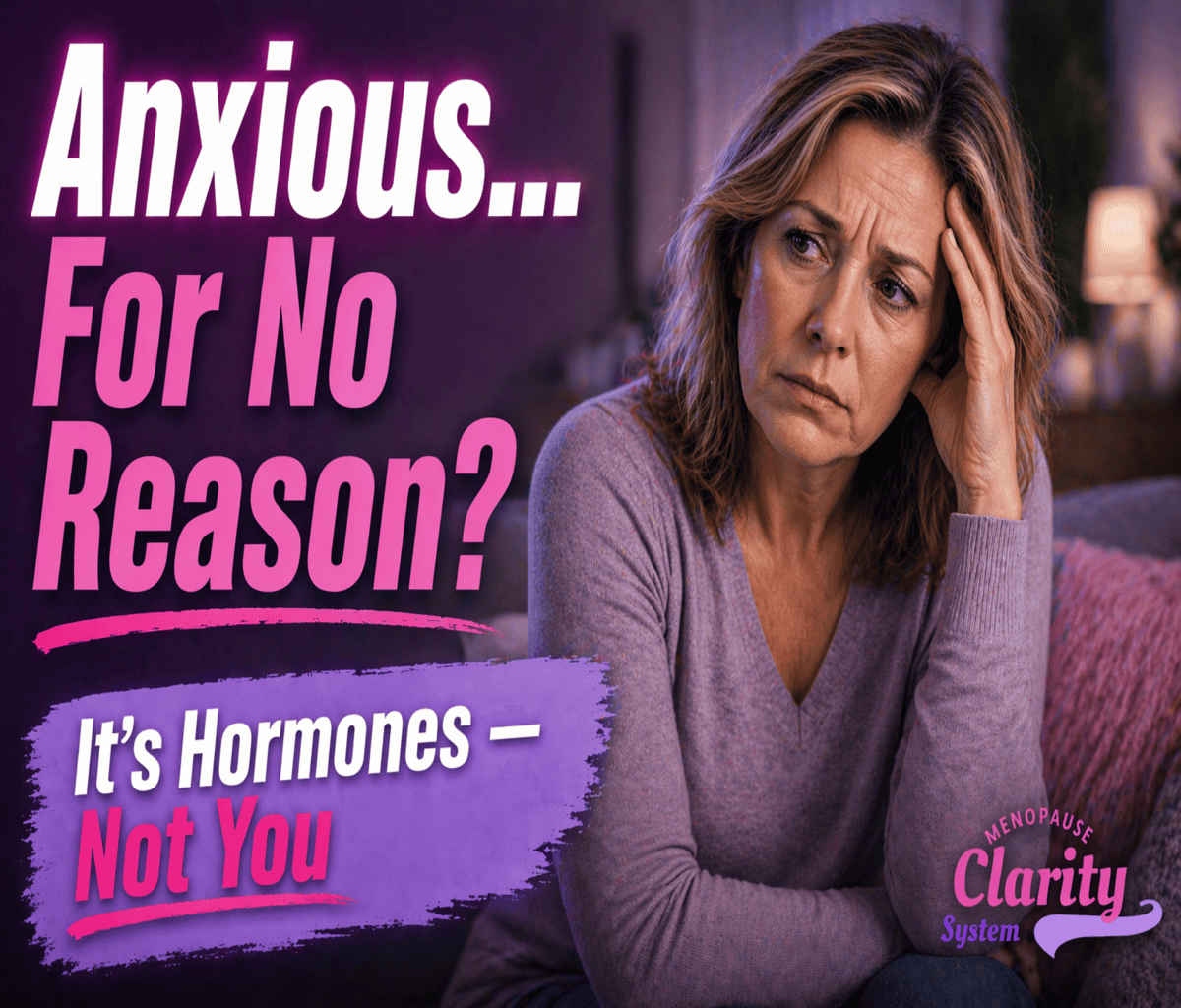
You wake up feeling anxious.
Nothing particularly stressful has happened. You don’t have a major problem to solve. But something feels wrong.
Your heart may be beating faster than usual. Your thoughts are racing. Small problems suddenly seem overwhelming.
And the strangest part?
You never used to feel this way.
If you’re in your 40s or 50s and experiencing unfamiliar anxiety, you may be wondering whether menopause has something to do with it.
The answer is yes, it can.
Anxiety symptoms can appear or become more noticeable during perimenopause and menopause. But the relationship between hormones and anxiety is more complicated than simply having too much or too little of one hormone.
Understanding what’s happening can help you feel more informed, less confused, and better prepared to find relief.
Why Can Anxiety Feel Worse During Menopause?
During perimenopause, estrogen and progesterone levels fluctuate as ovulation becomes less predictable.
These hormones interact with several systems involved in brain function, sleep, and emotional wellbeing.
For some women, the menopause transition is associated with increased anxiety, irritability, or changes in mood.
However, hormonal fluctuations aren’t the only possible explanation.
Sleep problems, stressful life events, previous experiences with anxiety, medications, and other health conditions can all contribute.
In many cases, several factors may be involved at the same time.
The important thing to understand is that menopause may be part of the picture, but it isn’t always the entire explanation.
1. Hormonal Changes May Influence Mood
Estrogen interacts with brain systems involved in mood regulation, including those associated with serotonin and other neurotransmitters.
During perimenopause, estrogen levels can fluctuate considerably.
Researchers believe these changes may contribute to increased vulnerability to mood symptoms in some women.
But that doesn’t mean every episode of anxiety is directly caused by estrogen fluctuations.
And it doesn’t mean a hormone test can identify the precise cause of your anxiety.
Mood and anxiety symptoms are influenced by a combination of biological, psychological, and social factors.
Understanding that complexity is more useful than searching for one hormonal imbalance to blame.
2. Poor Sleep Can Make Anxiety Feel More Intense
Sleep disruption is common during the menopause transition.
Hot flashes and night sweats can interrupt sleep, while stress and insomnia may make it difficult to fall asleep or stay asleep.
After several nights of poor sleep, you may notice:
- Greater irritability
- Difficulty concentrating
- Increased emotional sensitivity
- Lower tolerance for everyday stress
- More persistent worry
Poor sleep and anxiety can also reinforce one another.
You may feel anxious because you’re exhausted, then find that anxiety makes it harder to sleep the following night.
This can become a frustrating cycle.
Addressing sleep problems may be an important part of managing anxiety during menopause.
If you’re regularly waking during the night, read our article on why you wake up at 3AM during menopause.
3. Hot Flashes and Palpitations Can Feel Like Anxiety
Some menopause symptoms can produce physical sensations that resemble anxiety.
During a hot flash, you may experience sudden warmth, sweating, and a faster heartbeat.
These sensations can feel unsettling, especially if they happen unexpectedly.
Some women also report palpitations during the menopause transition.
However, it’s important not to assume that a racing heart is always caused by menopause or anxiety.
Palpitations can have several causes, including heart rhythm problems, thyroid disorders, medications, and other conditions.
New, persistent, or concerning palpitations should be assessed by a healthcare professional.
If palpitations occur with chest pain, fainting, or severe shortness of breath, seek emergency medical care.
4. Midlife Stress Can Add to the Problem
For many women, menopause arrives during an already demanding stage of life.
You may be managing career responsibilities, caring for children or aging parents, dealing with relationship changes, or adjusting to new financial pressures.
Even positive life changes can create stress.
When these challenges overlap with poor sleep or uncomfortable physical symptoms, anxiety may become harder to manage.
This doesn’t mean your anxiety is imaginary or simply a matter of not coping well enough.
It means your overall circumstances deserve attention alongside any menopause-related changes.
5. Why Anxiety Sometimes Feels Worse at Night
Have you ever noticed that anxious thoughts become more intense when you wake up in the middle of the night?
Without the usual distractions of the day, worries can feel more prominent.
If you’re already experiencing insomnia or night sweats, nighttime awakenings may give those thoughts more opportunities to take hold.
You may have heard that anxiety between 2AM and 4AM is caused by a cortisol spike.
But waking up anxious at a particular time doesn’t establish that your cortisol is abnormally high.
Cortisol follows a normal daily rhythm, and nighttime anxiety can have many possible explanations.
Rather than assuming one hormone is responsible, it can help to look at your sleep patterns, stress levels, physical symptoms, and overall health.
How to Calm Menopause Anxiety Naturally
If you’re experiencing anxiety during menopause, there are several practical approaches that may help.
Natural strategies can be useful, but they aren’t a substitute for professional care when anxiety is persistent, severe, or affecting daily life.
1. Make Sleep a Priority
Start by identifying what’s disrupting your sleep.
If night sweats are waking you, treating those symptoms may improve sleep quality.
Try to maintain a consistent sleep schedule and a comfortable sleeping environment.
For persistent insomnia, cognitive behavioural therapy for insomnia (CBT-I) is an evidence-based treatment worth discussing with a healthcare professional.
2. Move Your Body Regularly
Physical activity can support mood, sleep, and overall wellbeing.
Walking, swimming, cycling, dancing, yoga, and resistance training are all possible options.
You don’t need an exhausting workout to benefit from movement.
Choose activities that suit your health and fitness level and that you can maintain consistently.
3. Try Relaxation and Mindfulness Techniques
Breathing exercises, mindfulness, meditation, and other relaxation practices may help some people manage feelings of stress and anxiety.
For example, when you notice yourself becoming overwhelmed, try slowing your breathing and bringing your attention to your immediate surroundings.
These practices won’t eliminate every cause of anxiety, but they can be useful coping tools.
4. Pay Attention to Caffeine and Alcohol
Caffeine can contribute to jitteriness, palpitations, and sleep difficulties in some people.
Alcohol may initially feel relaxing but can disrupt sleep and worsen anxiety symptoms.
Consider whether either affects how you feel.
You don’t necessarily need to eliminate everything you enjoy. The goal is to recognize patterns and make informed adjustments.
5. Stay Connected
Anxiety can make you want to withdraw from other people.
But supportive relationships can be an important part of emotional wellbeing.
Talking with a trusted friend, family member, support group, or mental health professional may help you feel less isolated.
6. Consider Cognitive Behavioural Therapy
Cognitive behavioural therapy (CBT) is an evidence-based treatment for anxiety.
It can help you identify patterns of worry, respond differently to anxious thoughts, and develop practical coping strategies.
CBT may be especially useful if anxiety is affecting your work, relationships, sleep, or everyday activities.
7. Don’t Ignore Persistent Symptoms
If anxiety is frequent, worsening, or difficult to manage, speak with a qualified healthcare professional.
Effective treatments are available, including psychotherapy and, when appropriate, medication.
You don’t have to rely exclusively on natural approaches.
Can Menopause Hormone Therapy Help Anxiety?
Menopausal hormone therapy is effective for treating bothersome hot flashes and night sweats in appropriately selected women.
For some women, treating these symptoms may improve sleep and overall wellbeing.
Research into hormone therapy and mood symptoms is more complex, however.
Hormone therapy is not a universal treatment for anxiety disorders and should not replace appropriate mental health assessment or treatment.
Whether hormone therapy is suitable depends on your symptoms, medical history, preferences, and individual risks and benefits.
A healthcare professional can help you explore the options.
When Should You Seek Medical Advice?
It’s worth arranging an assessment if:
- Anxiety is new, persistent, or worsening.
- Worry or panic is interfering with daily activities.
- You’re experiencing frequent palpitations or other unexplained physical symptoms.
- Sleep problems are significantly affecting your wellbeing.
- You’re avoiding activities or withdrawing from relationships because of anxiety.
- You’re feeling persistently low or hopeless.
Menopause may contribute to anxiety, but thyroid problems, medication effects, mental health conditions, and other medical issues may also need consideration.
If you feel at risk of harming yourself, seek immediate emergency or crisis support.
How the Menopause Clarity System Can Help
One of the hardest things about menopause is trying to understand why several symptoms seem to appear together.
You may be sleeping poorly, feeling unusually anxious, struggling with concentration, and wondering whether they’re connected.
The Menopause Clarity System™ helps you make sense of common menopause-related changes without assuming that every symptom has one simple hormonal cause.
It provides a structured educational framework to help you:
- Understand common changes during perimenopause, menopause, and postmenopause.
- Recognize patterns in your symptoms.
- Explore practical ways to support your wellbeing.
- Prepare for more informed conversations with healthcare professionals.
- Feel more confident navigating this stage of life.
MCS is designed to support your understanding of menopause, not to diagnose anxiety or identify an exact hormonal imbalance.
Ready to understand your menopause symptoms with greater clarity?
Explore the Menopause Clarity System
The Bottom Line: Menopause Anxiety Is Manageable
Anxiety during menopause can feel unfamiliar, intense, and frustrating.
Hormonal fluctuations may contribute, but disrupted sleep, physical symptoms, everyday stress, and other health factors can also play a role.
You don’t need to assume your hormones are broken.
And you don’t need to figure everything out by yourself.
Understanding possible contributors, adopting supportive habits, and getting appropriate care can help you move toward feeling better.
The goal isn’t to eliminate every stressful feeling. It’s to understand what you’re experiencing and find the support that works for you.
Medical disclaimer: This article is for general educational purposes only and does not provide personalized medical advice, diagnosis, or treatment. Consult a qualified healthcare professional about persistent anxiety, new or concerning symptoms, and your individual treatment options.