How Cortisol Is Wrecking Your Body During Menopause (And What to Do About It)
You’re exhausted, but you can’t sleep.
You’re more easily overwhelmed than you used to be. Your waistline seems to be changing, even though your daily habits haven’t changed much.
And everywhere you look, someone is telling you the same thing:
It’s your cortisol.
But is cortisol really responsible for everything you’re experiencing during menopause?
The answer is more complicated—and understanding the difference between normal hormonal changes, stress, and menopause symptoms can help you avoid unnecessary worry and misleading advice.
Let’s separate the facts from the myths.
What Is Cortisol, and Why Does It Matter?
Cortisol is a hormone produced by your adrenal glands.
It’s often called the stress hormone, but that’s only part of its job.
Cortisol helps regulate several important functions, including:
- Your body’s response to physical and psychological stress
- Blood sugar regulation
- Metabolism
- Inflammation and immune responses
- Your natural sleep-wake cycle
Cortisol is not a harmful hormone that needs to be eliminated.
In fact, you need it to survive.
Normally, cortisol follows a daily rhythm. Levels tend to be higher in the morning and lower later in the day.
This rhythm helps your body respond to everyday demands.
Problems can arise when cortisol regulation is disrupted by certain medical conditions, but feeling stressed or tired doesn’t automatically mean your cortisol levels are abnormal.
Does Menopause Cause High Cortisol?
This is where much of the online menopause advice becomes misleading.
During perimenopause, estrogen and progesterone levels fluctuate. These changes can affect sleep, temperature regulation, mood, and other aspects of wellbeing.
Researchers have also studied how menopause interacts with the body’s stress-response system.
However, menopause does not automatically cause chronically elevated cortisol levels.
The relationship between reproductive hormones, stress, sleep, and cortisol is complex, and research findings are not entirely consistent.
You cannot determine your cortisol levels from symptoms such as belly fat, anxiety, fatigue, or poor sleep alone.
Those symptoms can have many different explanations.
Understanding this distinction matters because it helps you focus on what you’re actually experiencing rather than chasing an unconfirmed hormone imbalance.
Why Stress Can Feel Harder to Manage During Menopause
Many women report feeling less resilient to everyday stress during perimenopause and menopause.
That experience is real, even when cortisol isn’t the primary explanation.
Several factors may contribute.
1. Sleep Disruption
Hot flashes and night sweats can interrupt sleep.
Poor sleep can affect concentration, emotional regulation, energy, and your ability to manage daily challenges.
After several restless nights, ordinary frustrations may feel much more difficult.
2. Hormonal Fluctuations
Changes in estrogen and progesterone may influence brain systems involved in mood and sleep.
Some women experience new or worsening mood symptoms during the menopause transition.
However, hormonal changes are not the only possible cause of anxiety, irritability, or low mood.
3. Midlife Pressures
Menopause often coincides with demanding life circumstances.
You may be managing career responsibilities, aging parents, family changes, financial pressures, or concerns about your own health.
These challenges can increase your overall stress burden, regardless of your hormone levels.
4. Physical Symptoms
Persistent hot flashes, joint discomfort, sleep difficulties, or other symptoms can become stressful in their own right.
Sometimes it’s not one single hormonal change that’s making life difficult.
It’s the cumulative effect of several challenges happening at once.
Cortisol and Menopause Belly Fat: What’s the Connection?
One of the most common claims online is that high cortisol causes menopause belly fat.
There’s some science behind the relationship between cortisol and metabolism, but the popular explanation is often too simplistic.
Excess cortisol associated with certain medical conditions can contribute to changes in body fat distribution.
However, this does not mean that ordinary midlife abdominal weight gain is caused by high cortisol.
During menopause, changes in estrogen are associated with a tendency to store a greater proportion of body fat around the abdomen.
Aging, changes in muscle mass, physical activity, sleep, nutrition, and genetics can also influence body composition.
You do not need to assume you have a cortisol problem simply because your waistline has changed.
And there’s no reliable evidence that a special cortisol detox, supplement, or restrictive diet is necessary to address typical menopause-related body composition changes.
Can Exercise Make Cortisol Worse?
You may have heard that cardio is bad for menopausal women because it raises cortisol and causes belly fat.
That claim is misleading.
Cortisol can rise temporarily during exercise. This is a normal physiological response, not evidence that exercise is harming your body.
Regular physical activity offers important benefits during and after menopause, including support for:
- Cardiovascular health
- Bone strength
- Muscle mass and physical function
- Sleep quality
- Mood and mental wellbeing
- Long-term metabolic health
Both aerobic exercise and resistance training can be valuable.
The right amount and intensity depend on your fitness, health, preferences, and recovery needs.
If an exercise routine leaves you persistently exhausted or injured, it may need adjustment.
But there’s no reason for most women to abandon cardio out of fear of cortisol.
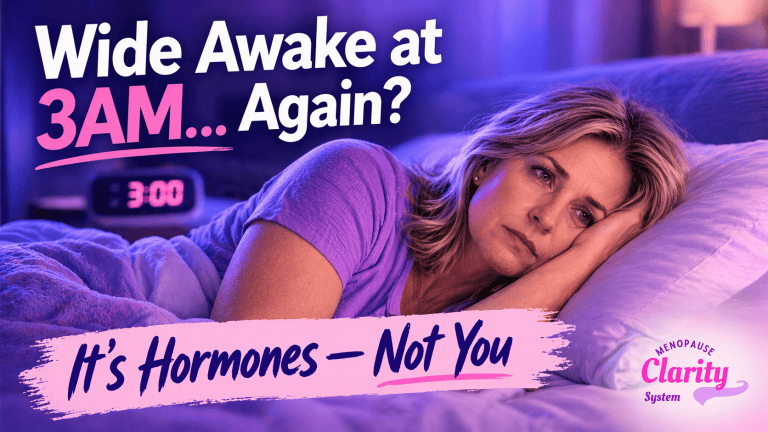
Why You Might Be Waking Up at 3 A.M.
Waking in the middle of the night is a common frustration during the menopause transition.
It’s tempting to blame a nighttime cortisol spike.
However, waking at 3 a.m. is not proof that your cortisol is too high.
Possible contributors include:
- Night sweats or changes in temperature regulation
- Stress or anxiety
- Insomnia
- Alcohol or caffeine
- Sleep apnea
- Medication effects
- Other medical or sleep-related conditions
Cortisol naturally participates in the sleep-wake cycle, but the precise time you wake up does not establish a particular hormone imbalance.
If nighttime waking becomes persistent, identifying possible causes is more useful than assuming you need to lower cortisol.
Five Practical Ways to Support Your Wellbeing
You don’t need to diagnose yourself with high cortisol to take meaningful steps toward feeling better.
1. Make Sleep a Priority
Keep a reasonably consistent sleep schedule and create a comfortable sleeping environment.
If hot flashes or night sweats are disrupting your sleep, ask your healthcare professional about treatment options.
Persistent insomnia may benefit from cognitive behavioural therapy for insomnia (CBT-I), an evidence-based treatment.
2. Stay Physically Active
Choose activities you enjoy and can maintain.
Walking, cycling, swimming, strength training, and other forms of movement can all contribute to better health.
Include resistance training where appropriate to help maintain muscle and bone strength.
3. Eat Regular, Balanced Meals
Focus on a sustainable eating pattern that includes adequate protein, fibre-rich foods, fruits, vegetables, and other nutrient-dense choices.
Avoid extreme diets or unnecessary restrictions based on unproven cortisol claims.
4. Find Ways to Manage Stress
Stress-management techniques such as mindfulness, breathing exercises, enjoyable hobbies, and social connection may help improve how you cope with everyday pressures.
They are useful tools, but they should not be presented as guaranteed ways to normalize hormone levels.
5. Seek Help for Persistent Symptoms
If you’re experiencing significant anxiety, ongoing exhaustion, severe sleep disruption, or other concerning symptoms, speak with a qualified healthcare professional.
A proper assessment can help identify whether menopause, another health condition, or several overlapping factors are contributing.
Do You Need a Cortisol Test?
For most women experiencing typical menopause symptoms, routine cortisol testing isn’t necessary.
Cortisol tests are used when healthcare professionals suspect specific medical conditions affecting cortisol production or regulation.
Testing without a clear medical reason can produce confusing results because cortisol levels naturally vary throughout the day and respond to many factors.
If you have symptoms suggesting a possible endocrine disorder, your healthcare professional can determine whether testing is appropriate.
A commercial hormone panel or online symptom quiz cannot reliably diagnose a cortisol disorder.
How the Menopause Clarity System Helps You Make Sense of Your Symptoms
One of the most frustrating parts of menopause is trying to understand why so many things seem to change at once.
Poor sleep, fatigue, anxiety, hot flashes, and changes in weight can overlap.
It’s easy to get caught up in competing explanations and contradictory advice.
The Menopause Clarity System™ offers a clearer starting point.
It helps you understand common menopause-related changes, recognize patterns in your symptoms, and explore practical ways to support your wellbeing.
Instead of assuming cortisol—or any single hormone—is responsible for everything, MCS encourages you to look at the bigger picture.
You’ll gain a structured educational framework for understanding your experiences and preparing for more informed conversations with healthcare professionals.
Want to understand your menopause symptoms without the confusion?
Explore the Menopause Clarity System
The Bottom Line: Cortisol Isn’t the Whole Story
Cortisol plays an essential role in your health, but it isn’t the universal explanation for menopause symptoms.
Hormonal fluctuations, disrupted sleep, everyday stress, aging, and other health factors can interact in complicated ways.
The most useful approach isn’t to assume your cortisol is too high or search for a quick hormone fix.
It’s to understand your symptoms, support your overall health, and seek appropriate care when needed.
Menopause can be complicated. Understanding it shouldn’t have to be.
Medical disclaimer: This article is for general educational purposes only and is not a substitute for personalized medical advice, diagnosis, or treatment. Consult a qualified healthcare professional about persistent, worsening, unusual, or concerning symptoms and your individual treatment options.