
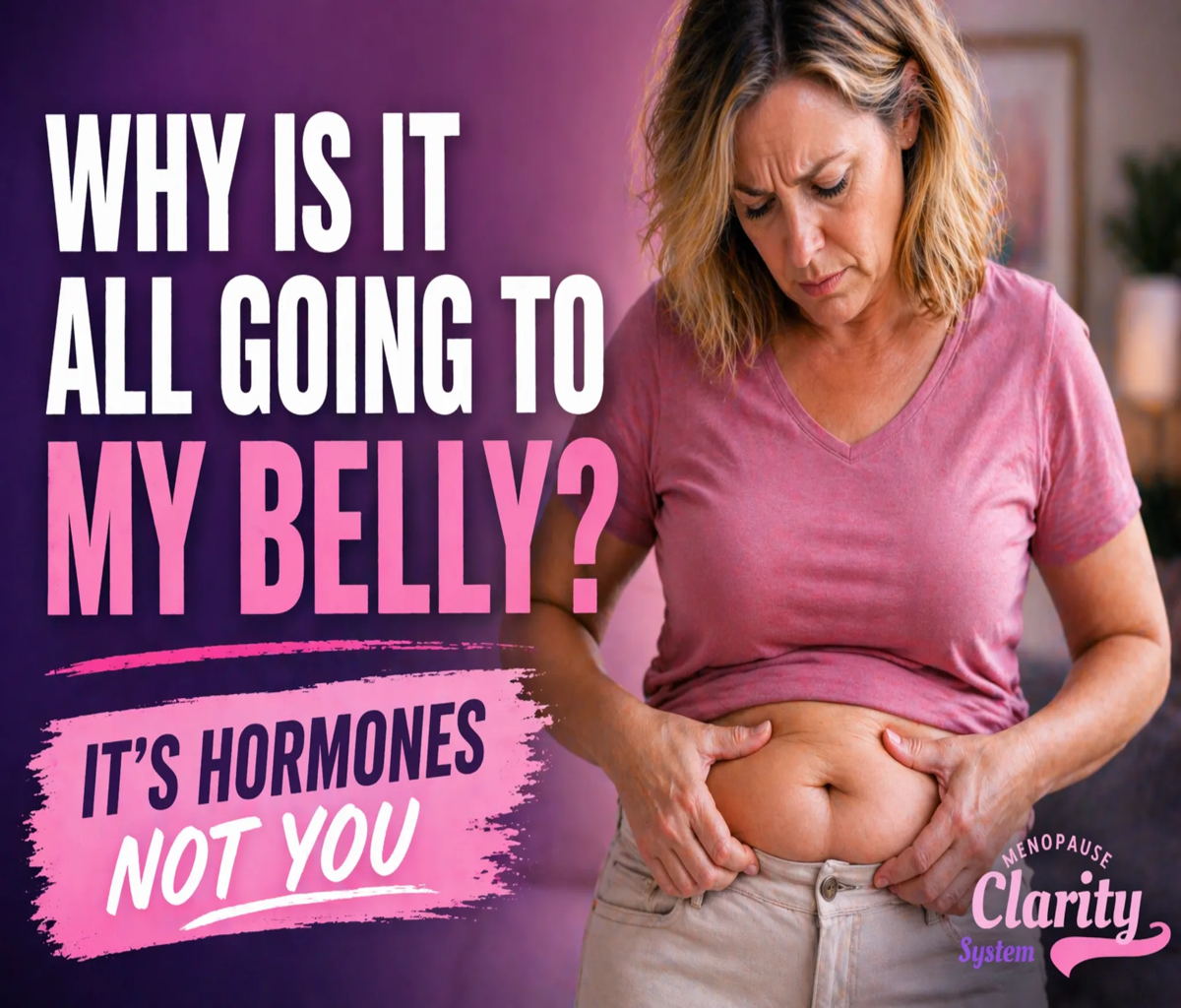
Why Menopause Belly Fat Is So Stubborn (And What Actually Works)
You’re eating much the same way you always have.
You’re trying to stay active.
But suddenly, your jeans feel tighter around the waist, and the weight seems to be settling in places it never used to.
Sound familiar?
For many women, changes in abdominal fat are among the most frustrating parts of the menopause transition.
And when the usual advice is simply to eat less and exercise more, it’s easy to feel as though you’re doing something wrong.
But here’s something important to understand:
Your body really does change during menopause, and those changes can influence where you store fat.
That doesn’t mean weight gain is inevitable. And it certainly doesn’t mean you’re powerless to do anything about it.
Let’s look at what’s happening and what can genuinely help.
Why Does Belly Fat Increase During Menopause?
During perimenopause and menopause, estrogen levels fluctuate and eventually decline.
Estrogen influences several processes in the body, including fat distribution.
Before menopause, women tend to store a greater proportion of body fat around the hips and thighs.
After menopause, there’s often a shift toward storing a greater proportion around the abdomen.
This can happen even when your overall weight hasn’t changed dramatically.
However, estrogen isn’t the only factor involved.
Several changes commonly occur around the same stage of life.
1. Changes in Body Composition
As we age, we tend to lose muscle mass unless we take steps to maintain it.
Muscle plays an important role in physical strength, mobility, and energy expenditure.
A gradual decline in muscle mass can make weight management more challenging over time.
2. Changes in Physical Activity
Busy schedules, poor sleep, joint discomfort, and other midlife challenges may make it harder to stay as active as before.
Even small reductions in daily movement can influence energy balance over time.
3. Sleep Disruption
Night sweats and insomnia can make restful sleep difficult.
Inadequate sleep may affect appetite, food choices, energy, and motivation to exercise.
This doesn’t mean poor sleep automatically causes belly fat, but it can make healthy routines harder to maintain.
4. Aging and Genetics
Changes in metabolism, inherited body-fat patterns, medications, and individual health conditions can all contribute.
The bottom line: Menopause-related belly fat isn’t caused by one hormone acting alone.
It’s usually more useful to consider several overlapping influences.
Is Cortisol Responsible for Menopause Belly Fat?
You’ve probably seen claims that high cortisol is the real reason your stomach is getting bigger.
Cortisol is a hormone involved in the body’s normal stress response and metabolism.
Certain medical conditions involving excessive cortisol can cause changes in body fat distribution.
But ordinary abdominal weight gain during menopause does not establish that you have high cortisol.
And there’s no good reason to assume that every woman struggling with belly fat needs to lower her cortisol levels.
Stress and poor sleep can influence eating habits, activity levels, and general wellbeing.
Addressing those issues may help you maintain healthier routines.
But beware of products or programs promising to switch off cortisol and melt away menopause belly fat.
There is no reliable shortcut that selectively removes abdominal fat by manipulating cortisol.
Why Your Old Weight-Loss Strategies May Feel Less Effective
Maybe you used to lose a few pounds by cutting back on snacks or adding some extra walks.
Now, the same approach doesn’t seem to produce the same results.
There are several possible reasons.
With age, changes in muscle mass, activity levels, and overall energy requirements may mean that your body needs fewer calories than it did years earlier.
Hormonal changes can also influence where fat is stored.
And if you’re sleeping poorly or dealing with persistent menopause symptoms, maintaining consistent habits may become more difficult.
None of this means your metabolism has stopped working.
It means that your circumstances and your body’s needs may have changed.
Instead of responding with increasingly restrictive diets or exhausting exercise routines, a more sustainable approach is usually more useful.
Does Cardio Make Menopause Belly Fat Worse?
No. The claim that cardio automatically raises cortisol and causes abdominal fat gain is misleading.
Cortisol can temporarily increase during exercise. That’s a normal physiological response.
Regular aerobic activity supports cardiovascular health, physical fitness, and weight management.
Walking, swimming, cycling, dancing, and other enjoyable activities can all be beneficial.
Resistance training is also particularly valuable during and after menopause because it helps preserve muscle mass and strength.
You don’t need to choose between cardio and strength training.
For many women, a combination of both is a sensible approach.
The best exercise routine is one that suits your health, abilities, preferences, and lifestyle—and that you can maintain consistently.
Five Practical Strategies That Can Help
There’s no guaranteed way to target fat loss from one specific part of the body.
However, there are evidence-based habits that support healthy body composition and overall wellbeing.
1. Prioritize Strength Training
Resistance training helps maintain or build muscle mass.
You don’t necessarily need a gym membership or complicated equipment.
Depending on your fitness level, options may include:
- Bodyweight exercises
- Resistance bands
- Dumbbells
- Weight machines
- Supervised strength-training classes
Start at a manageable level and increase gradually.
If you have medical conditions, injuries, or concerns about exercise, ask a qualified professional for guidance.
2. Keep Moving Throughout the Day
Structured workouts are useful, but everyday movement matters too.
Walking, gardening, household activities, and other forms of movement contribute to overall activity levels.
Choose activities you enjoy rather than treating exercise as punishment for weight gain.
3. Eat in a Way You Can Sustain
Extreme diets often promise rapid results, but long-term consistency matters more.
A balanced eating pattern can include:
- Adequate protein to support muscle maintenance
- Vegetables and fruit
- Fibre-rich whole grains and legumes
- Healthy sources of dietary fat
- Appropriate portions based on your individual needs
If weight loss is your goal, a sustainable calorie deficit may help, but nutritional needs vary.
A registered dietitian can help you develop an approach that supports your health without unnecessary restriction.
4. Take Sleep Problems Seriously
If you’re regularly waking because of night sweats, hot flashes, or insomnia, don’t simply accept it as something you must endure.
Effective treatment options are available for many menopause-related sleep disruptions.
Improving sleep may make it easier to manage energy, activity, and everyday eating habits.
5. Focus on Health, Not Just the Scale
Your weight is only one measure of health.
Strength, stamina, blood pressure, blood glucose, cholesterol, and waist circumference may provide useful additional information.
Abdominal fat, particularly fat stored around internal organs, is associated with increased cardiometabolic risk.
But your individual risk depends on more than your waistline alone.
A healthcare professional can help you understand which measures matter most for you.
Can Menopause Hormone Therapy Help With Belly Fat?
Menopausal hormone therapy is an effective treatment for certain menopause symptoms, particularly hot flashes and night sweats.
It may also have modest effects on body-fat distribution in some women.
However, hormone therapy is not a weight-loss treatment and shouldn’t be prescribed solely to reduce belly fat.
Whether it’s appropriate depends on your symptoms, health history, personal preferences, and individual risks and benefits.
Discuss your options with a qualified healthcare professional.
What If You’re Doing Everything Right and Still Gaining Weight?
Persistent or unexpected weight changes deserve attention, especially when accompanied by other symptoms.
Certain medications, thyroid disorders, sleep problems, and other health conditions can influence weight.
If your weight is changing rapidly or you’re concerned about unexplained changes, arrange a medical assessment.
You don’t need to assume menopause is the explanation for everything.
And you don’t need to blame yourself.
How the Menopause Clarity System Can Help
One of the biggest frustrations during menopause is trying to make sense of several changes happening at once.
Your sleep may be disrupted.
Your energy may fluctuate.
Your mood may feel less predictable.
And changes in your body composition can add another layer of frustration.
The Menopause Clarity System™ helps you understand common menopause-related changes and recognize patterns in your symptoms.
Rather than offering a miracle belly-fat cure or claiming to identify an exact hormonal imbalance, MCS provides a structured educational approach to understanding your experiences.
It can help you:
- Learn how menopause affects different body systems.
- Recognize patterns involving sleep, energy, temperature changes, and other symptoms.
- Explore practical ways to support your wellbeing.
- Prepare for more informed conversations with healthcare professionals.
- Feel more confident navigating the menopause transition.
Ready to understand what’s changing in your body?
Explore the Menopause Clarity System
The Bottom Line: Your Body Is Changing, but You Still Have Options
Menopause can influence where your body stores fat, and the changes can be frustrating.
But menopause belly fat isn’t simply the result of high cortisol, a broken metabolism, or a lack of willpower.
Hormonal changes, aging, muscle mass, activity, sleep, and other factors can all contribute.
You may not be able to control every change that comes with menopause.
But you can take meaningful steps to support your strength, metabolic health, and long-term wellbeing.
The goal isn’t to fight your body. It’s to understand it and make informed decisions about your health.
Medical disclaimer: This article is for general educational purposes only and does not provide personalized medical advice, diagnosis, or treatment. Consult a qualified healthcare professional about unexplained weight changes, persistent symptoms, and your individual treatment options.